Shared crew calendar
One view of the week showing who is where. Useful the moment more than one person is out on jobs at the same time.
Jobs and scheduling
Scheduling is everything that happens after a customer says yes: putting the work on a calendar and making sure the right person turns up prepared, on the right day, with the right information.
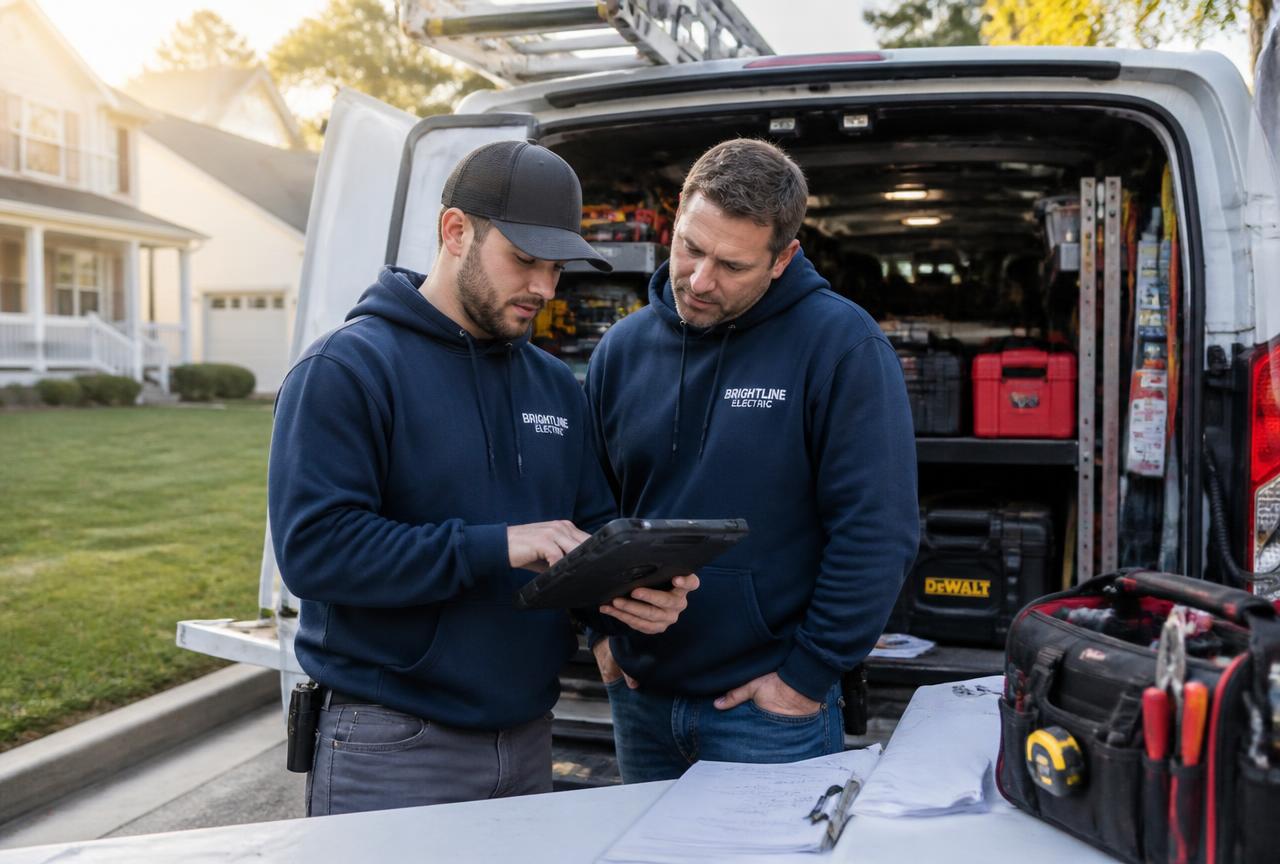
Winning the job is only half the work. The other half is getting it into the calendar, telling the customer when you are coming, telling your crew what they are walking into, and keeping a record of what was done.
Most of the damage here is quiet. A crew arrives without a gate code. A customer is out because nobody confirmed the time. A second visit is needed because the notes from the estimate never reached the person doing the work. None of that shows up as a lost inquiry, but it costs a full day just the same.
Before you look at software, three habits fix a surprising amount of this:
If those three are not in place, software will simply move the same confusion somewhere more expensive.
One view of the week showing who is where. Useful the moment more than one person is out on jobs at the same time.
Attaching a named person or crew to each job, so the work has an owner rather than a hopeful assumption about who picks it up.
An automatic confirmation when the job is booked and a reminder the day before. This is the most common reason businesses start looking at scheduling tools.
Access notes, scope and materials travelling with the job instead of being relayed by phone call on the morning.
Before and after photos and notes saved against the job, so the record stays with the customer history rather than a personal camera roll.
The part people forget to test: whether it is usable one-handed, on a phone, in a loft or a basement, with poor signal.
Comparisons are still being developed
We are not naming or ranking scheduling and job management systems yet. When we do, it will be because we can explain who each one suits and who it does not.
Scheduling starts with a won job, so it is closely tied to your customer records and quotes. The reminders described above are a form of automation, covered in more general terms on the AI and automation page.
Get first notice when new practical guides, buyer tools and templates are published.
Keep me updated